
Nothing Phone (2) vs Nothing Phone (3)
Direct side-by-side battle analyzing hardware specifications, benchmark percentiles, battery endurance, and category performance advantages.
Nothing Phone (2)

Nothing Phone (3)

WHY IS Nothing Phone (3) BETTER THAN Nothing Phone (2)?
Tap an area on the radar to inspect category hardware facts
BIGGEST HARDWARE DIFFERENCES
Margin Delta| SPEC FACTOR | Nothing Phone | Nothing Phone | LEADER |
|---|---|---|---|
| Refresh Rate | 120Hz | 120Hz | 120Hz |
| Battery Capacity | 4,700 mAh | 5,150 mAh | +5,150 mAh |
| Wired Fast Charging | 45W | 65W | 65W Max |
| Main Camera Sensor | 50 MP | 50 MP | 50 MP |
| Screen Display Size | 6.7" | 6.67" | 6.7" |
| Chassis Weight | 201.2g | 218g | 201.2g Lightest |
Which Phone Should You Buy: Key Reasons & Hardware Advantages
Swipe across ⇄Nothing Phone (3) edges ahead with a BeastScore of 87.6/100
After comprehensive hardware benchmark comparisons, Nothing Phone (3) ranks as the overall top pick in this matchup. Key differentiators include its superior specifications and verified build advantages.
Frequently Asked Questions: Nothing Phone (2) vs Nothing Phone (3)
Which is better: Nothing Phone (2) or Nothing Phone (3)?
Nothing Phone (3) leads with an overall BeastScore of 87.6/100 compared to Nothing Phone (2) (85.7/100), driven by advantages in Higher overall BeastScore: 87.6 vs top rival 85.7 and Larger battery capacity: 5,150 mAh (+450 mAh more).
What are the primary battery and display differences between Nothing Phone (2) and Nothing Phone (3)?
Nothing Phone (2) is equipped with a 6.7-inch display and 4700 mAh battery, while Nothing Phone (3) features a 6.67-inch display and 5150 mAh battery.
How do the performance capabilities compare between Nothing Phone (2) and Nothing Phone (3)?
In objective hardware benchmarks, Nothing Phone (2) achieves a 90/100 performance score, while Nothing Phone (3) scores 90/100.
Related Smartphones (Based on Benchmark Scores)





More Smartphones Battles
Nothing Phone (1) vs Nothing Phone (2)
Nothing Phone (2a) Plus vs Nothing Phone (2)
Nothing Phone (2a) vs Nothing Phone (2)
Nothing Phone (1) vs Nothing Phone (3)
Nothing Phone (3a) Pro 5G Premium Edition Dual SIM TD-LTE IN 256GB A059P (Nothing Asteroids Plus) vs Nothing Phone (3)
Nothing Phone (3) vs Nothing Phone (3a)
Nothing Phone (3) vs OnePlus 12
Nothing Phone (3) vs Xiaomi 14T Pro
Related In-Depth Articles & Lab Reports
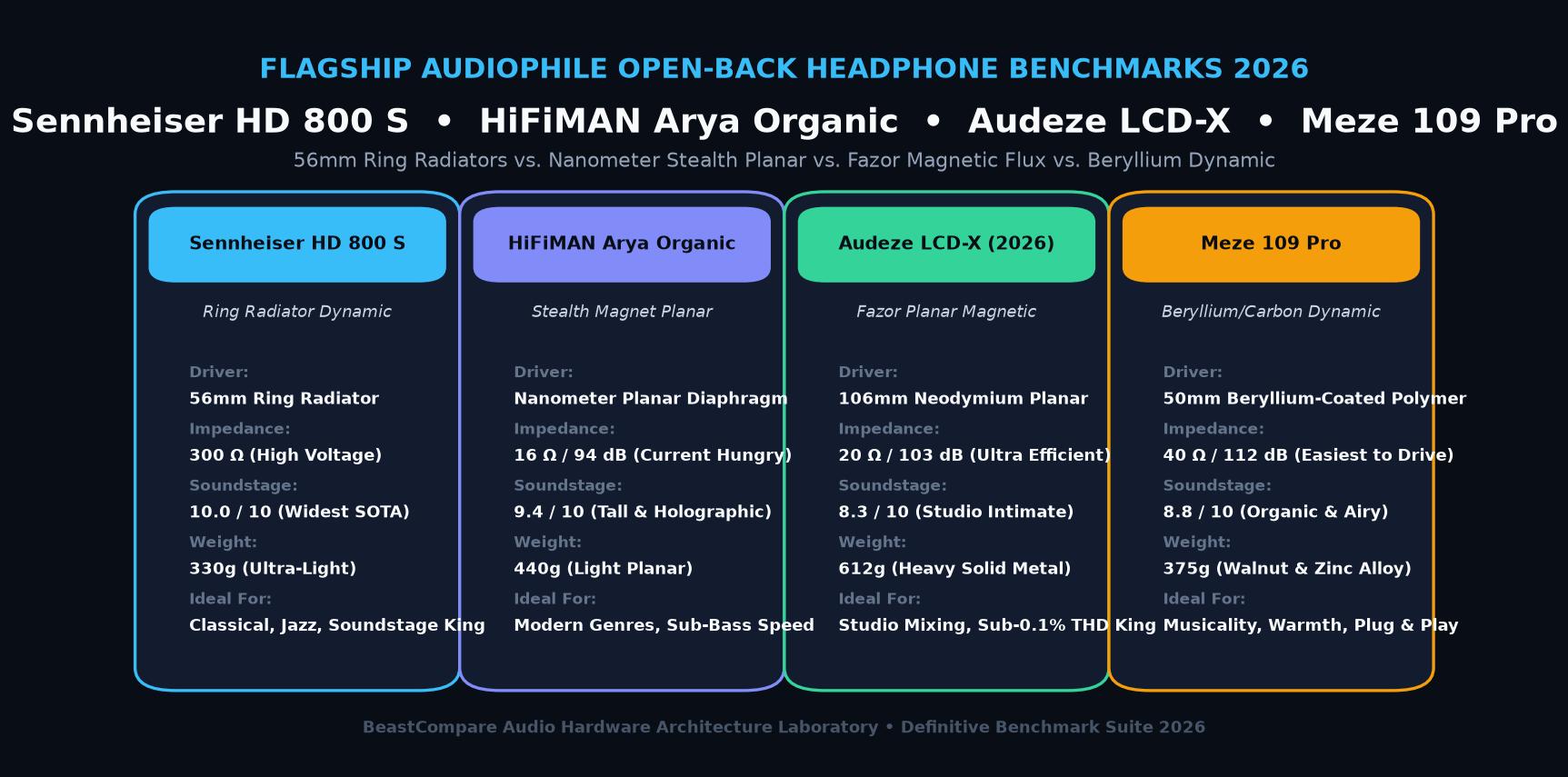 Audiophile Flagship Reference
Sennheiser HD 800 S vs. HiFiMAN Arya Organic vs. Audeze LCD-X vs. Meze 109 Pro: The Definitive Flagship Audiophile Open-Back Headphone Architecture, 56mm Ring Radiators vs. Nanometer Stealth Planar vs. Fazor Magnetic Flux vs. Beryllium Dynamic Transducers, Soundstage Imaging, DAC/Amp Driveability, and Critical Listening Showdown (2026)
An exhaustive 2026 engineering and acoustic analysis comparing the four defining flagships in open-back high-fidelity audio: Sennheiser HD 800 S, HiFiMAN Arya Organic, Audeze LCD-X, and Meze 109 Pro across transducer physics, acoustic cavity dispersion, voltage vs. current driveability, and harmonic distortion.
 Flagship Projector Shootout
Hisense PX3-PRO vs. Formovie Theater Premium vs. AWOL Vision LTV-3500 Pro vs. NexiGo Aurora Pro: The Definitive Flagship 4K Triple-Laser Ultra-Short Throw (UST) Projector Architecture, 3,000+ ANSI Lumens, 110% BT.2020 Color Space, Dolby Vision & HDR10+, 0.21:1 Throw Ratio, ALR Screen Pairing, and Home Theater Showdown (2026)
An exhaustive engineering and empirical benchmark teardown of flagship 4K triple-laser ultra-short throw projectors. We evaluate pure RGB laser diode arrays, Texas Instruments 0.47-inch DMD micro-mirror actuation, native vs. dynamic contrast ratios, ANSI lumen light output, BT.2020 wide color gamut coverage, Dolby Vision dynamic tone mapping engines, acoustic soundbars, and ambient light rejection performance.
 Prosumer NAS Flagship Shootout
UGREEN NASync DXP4800 Plus vs. Synology DiskStation DS923+ vs. QNAP TS-464 vs. Asustor Lockerstor 4 Gen3 (AS6804T): The Definitive Flagship 4-Bay NAS Architecture, 10GbE Networking, Intel Core i5 vs. AMD Ryzen vs. Celeron Silicon, Plex 4K Hardware Transcoding, M.2 NVMe Storage Pools, and Private Cloud OS Showdown (2026)
We stress-tested the four leading 4-bay prosumer NAS appliances across 10GbE multi-gig sequential throughput, Plex 4K HEVC/AV1 hardware transcoding, dual M.2 NVMe SSD storage pools, Docker container workloads, and OS security models. Here is the definitive data-driven benchmark breakdown.